


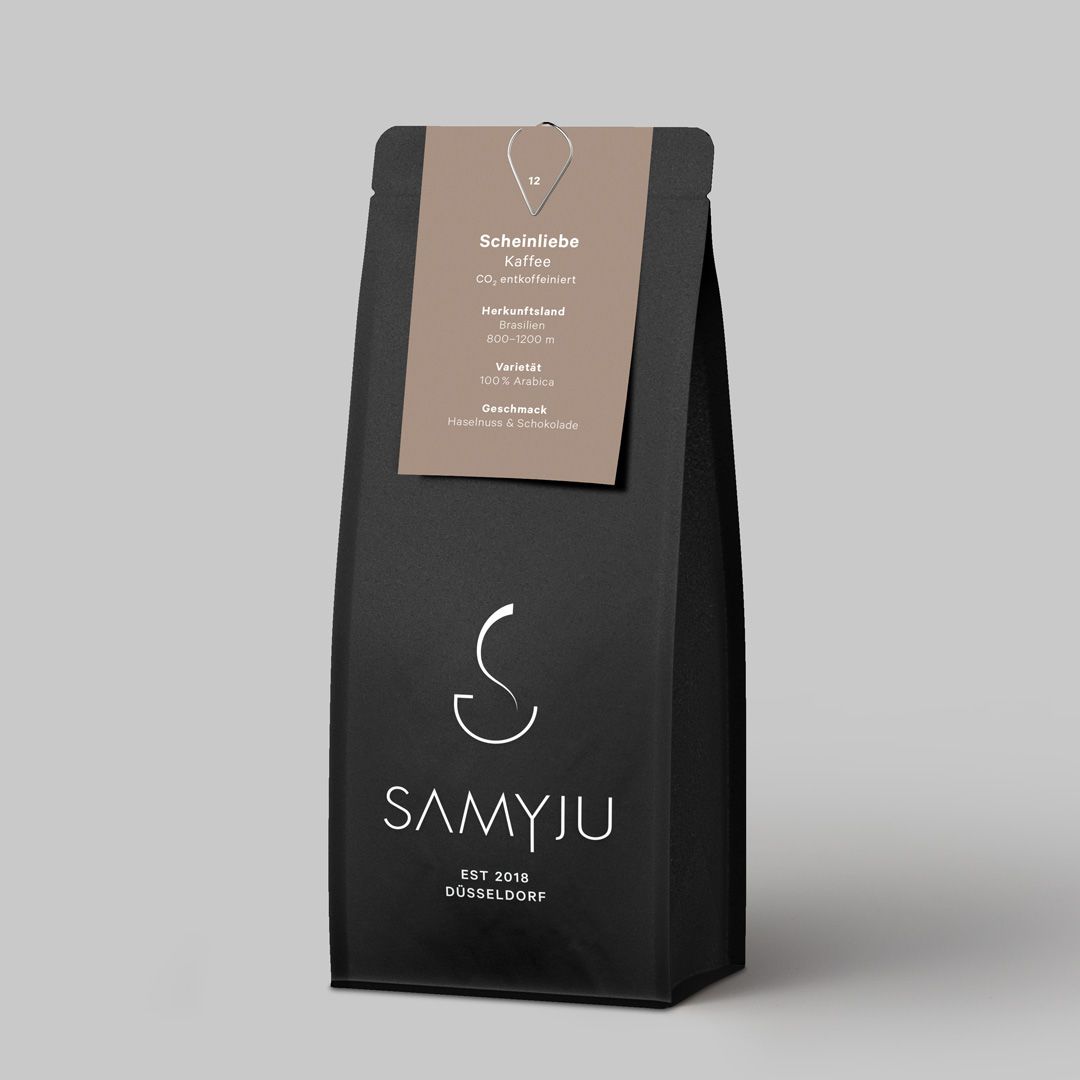

How decaffeination works
SAMYJU relies exclusively on solvent-free processes. The Swiss Water Process works only with water and osmosis – activated carbon filters bind caffeine but allow aromatic compounds to pass through. The CO₂ process uses supercritical carbon dioxide under high pressure and selectively dissolves caffeine without affecting other aromas. Both methods preserve what makes good coffee great: flavour, complexity, character. Less than 0.1 % residual caffeine.
Enjoy in the evening
A cup of coffee after dinner, without lying awake in bed three hours later. Full enjoyment, full night's rest.
Health-conscious
Less caffeine on medical advice? Decaf delivers flavour without the stimulating effect. Without any compromise on aroma.
For flavour purists
Without caffeine, the inherent sweetness of the bean comes through more strongly. Some decaf coffees taste rounder and softer than their caffeinated counterparts.

On par in terms of flavour
SAMYJU roasts decaffeinated coffee in separate profiles. The beans are more porous due to the decaffeination process and react differently to heat. This requires adapted roast profiles: lower temperatures, slower development, more precise control. The result: chocolate, caramel, nut – the aromas you expect from good coffee. As espresso with stable crema and full body. In a pour over with clear aromas and subtle sweetness. In a bean-to-cup machine just as reliable as caffeinated roasts.
Preparation and storage

Dosage
Same dosage as regular coffee: 60–70 g per litre for filter coffee, 7–9 g for an espresso.

Water temperature
92–96 °C. Freshly ground, if possible. Set decaf beans half a grind level coarser.

Storage
Cool, dry, dark, airtight. Not in the fridge – moisture and foreign odours damage the aroma.

Our quality promise
In the SAMYJU range you will find decaffeinated coffee in various roast profiles – for espresso, filter and bean-to-cup machines. All solvent-free decaffeinated, all with an SCA score above 82, all handcrafted drum-roasted. The same quality standards as every other roast in the range. The only difference: less than 0.1 % caffeine. Because flavour is not a question of caffeine.
Frequently Asked Questions about Decaffeinated Coffee
Modern decaf from specialty green coffee does not taste like deprivation. Solvent-free processes like Swiss Water or CO₂ preserve the aromas. Chocolate, caramel, nut – the typical coffee aromas are fully present. Without caffeine, the inherent sweetness of the bean even comes through more strongly.
SAMYJU relies on solvent-free processes: the Swiss Water Process works with water and activated carbon filters. The CO₂ process uses supercritical carbon dioxide under pressure. Both methods remove caffeine selectively and preserve the aromatic compounds of the bean.
Almost – the residual caffeine content is less than 0.1 %. That is significantly less than regular coffee (1.2–1.5 % for Arabica) and negligible for most people.
Yes. Our decaf espresso roasts produce stable crema and deliver full body. Tip: set the grind half a level coarser than for caffeinated beans, as decaffeinated beans are somewhat more porous.
For everyone who loves coffee but wants to avoid caffeine: evening connoisseurs, people with caffeine sensitivity and anyone seeking flavour without the stimulating effect. Decaf is not a compromise – but a conscious choice.