



Which beans are suitable for your bean-to-cup machine – and which are not
Not every roast works equally well in a bean-to-cup machine. The machine grinds, tamps and extracts automatically – you have fewer variables to adjust than with a portafilter machine. This makes the bean itself all the more important. Medium to dark roasts dissolve optimally with the automated brew parameters. Look for beans without a visible oil film – oily beans can clog the grinder. SAMYJU roasts: dry, even, with a controlled roast level. Ideal are beans between two and eight weeks after roasting.
Espresso straight
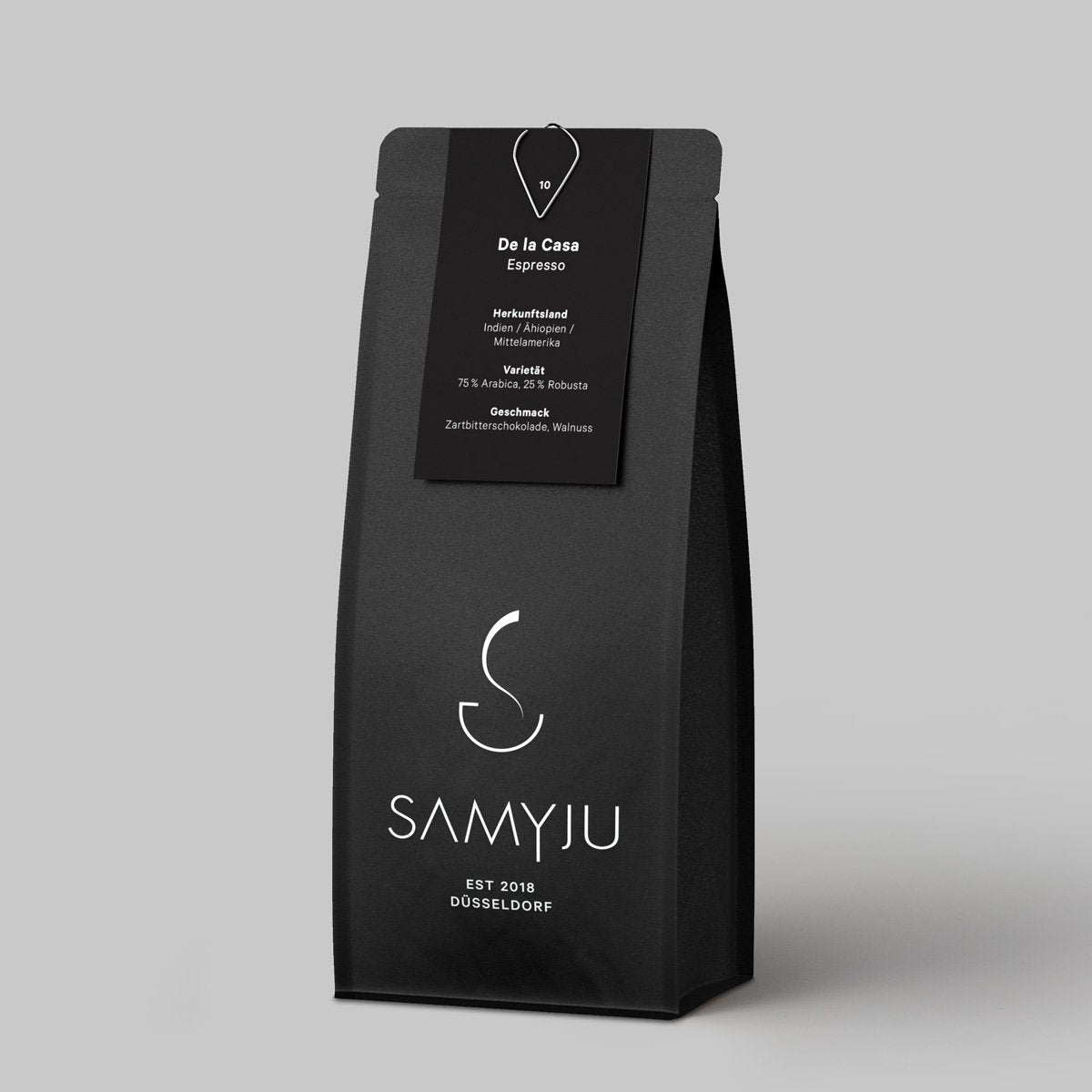
Medium roasts with notes of milk chocolate, caramel and nut. Round body, subtle acidity, pleasantly sweet aftertaste. For the quick double shot in between.
Cappuccino & Flat White
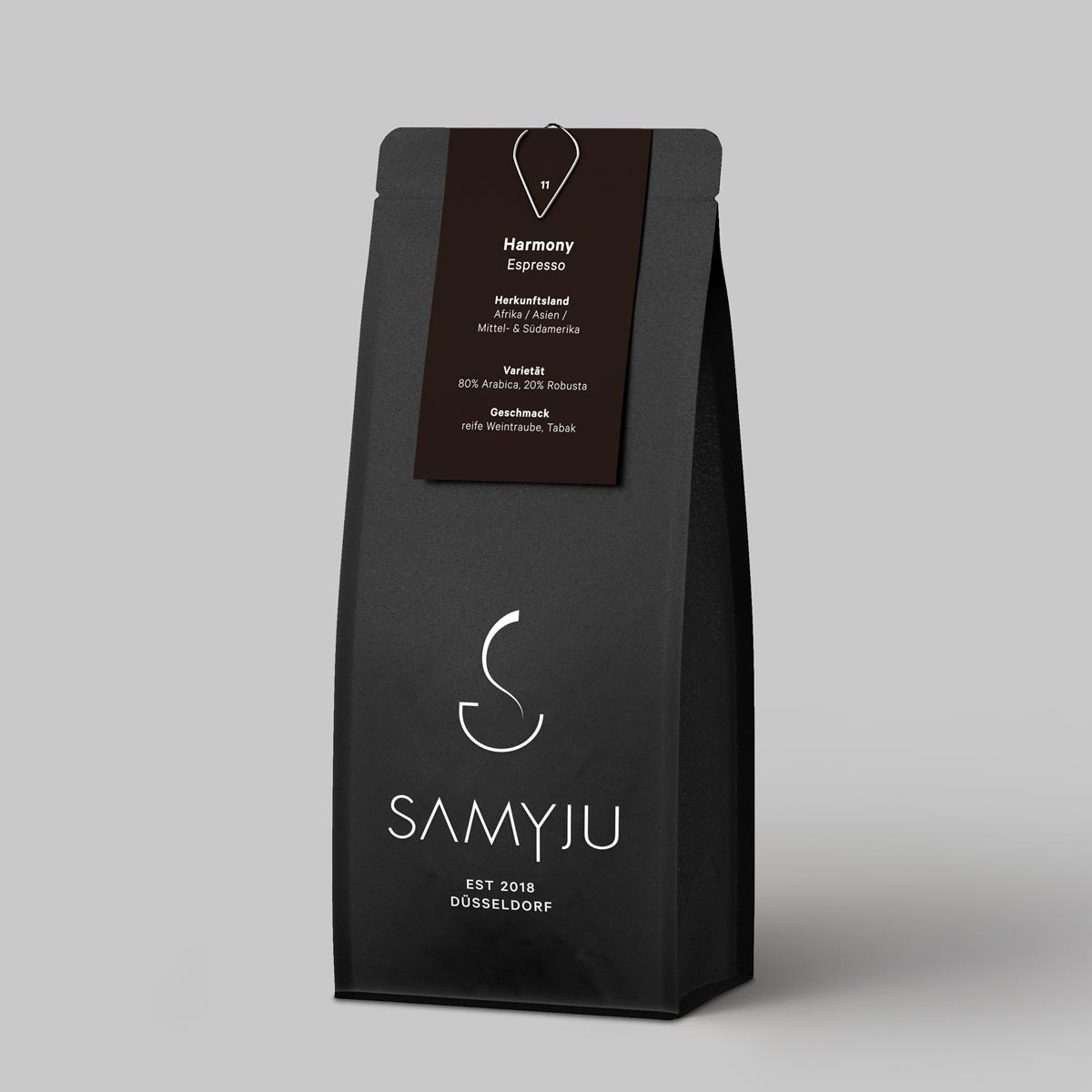
Darker roasts with diverse aromas. They hold their own against frothed milk and bring enough intensity for a ratio of 1:3 to 1:5.
Latte Macchiato
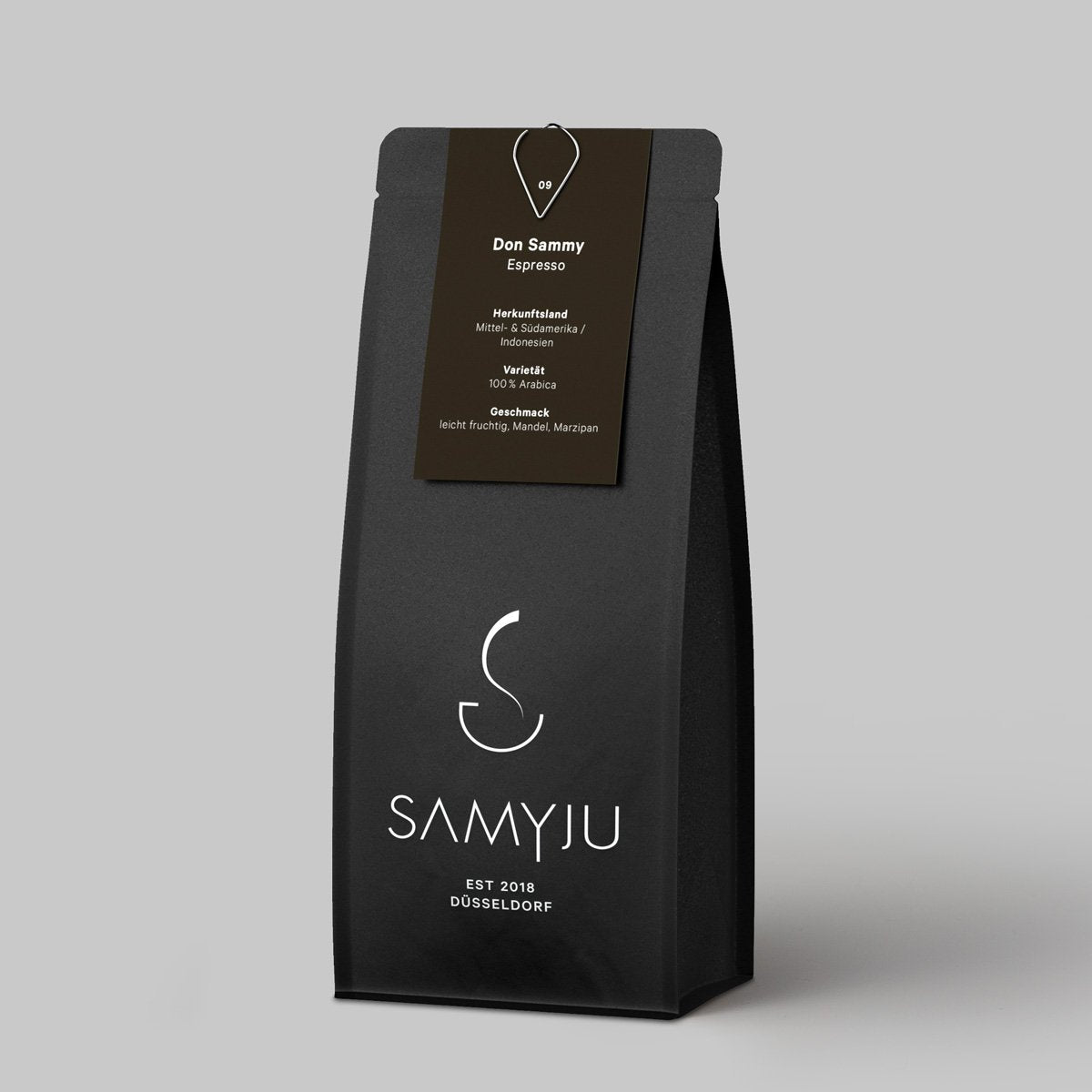
Bold blends with stable body and prominent sweetness. The espresso remains perceptible in flavour even in a lot of milk, without dominating. Harmonious and suitable for everyday use.

Grind size, temperature and maintenance – how to get the maximum from your bean-to-cup machine
Start with a medium grind setting and adjust from there. If the espresso tastes bitter, grind one level coarser. If it tastes thin and sour, one level finer. The optimal extraction takes 20 to 30 seconds. The brew temperature should be 90 to 94 °C. And do not forget the maintenance: daily rinsing of the brew group, weekly cleaning of the brew unit, descaling every four to eight weeks. A clean bean-to-cup machine is the foundation for consistent flavour.
What sets our espressi apart

Drum roasting
At least 16 minutes at 190–225 °C – for complex aromas without burnt notes.

Grinder-friendly
Dry roasted, without oil film – gentle on ceramic and steel grinders.

SCA 82+
Every batch is assessed in accordance with the SCA protocol. Only coffee that meets the Specialty standard is included in the range.

Roast-fresh
Freshly roasted. Best before date on every pack.

100 % Arabica or Blend with Robusta – what works in a bean-to-cup machine?
100 % Arabica stands for complex aromas, fine acidity and an elegant profile. In a bean-to-cup machine, however, pure Arabica can produce less crema. A Robusta component of 10 to 30 % delivers denser crema, more body and more intense chocolate notes – without bitterness, if it is high-quality specialty Robusta. SAMYJU uses Robusta where it improves performance in the bean-to-cup machine: more stable crema, bolder body, better milk compatibility. No dogmas – only flavour.
Frequently Asked Questions about Espresso for Bean-to-Cup Machines
Medium to dark roasts are best suited. They dissolve optimally with the automated brew parameters and produce stable crema. Look for beans without a visible oil film – oily beans can clog the grinder. SAMYJU roasts are specifically tuned for bean-to-cup machines.
Start with a medium setting. If the espresso tastes bitter, grind one level coarser. If it tastes thin and sour, one level finer. The optimal extraction takes 20 to 30 seconds for an espresso of 25 to 30 millilitres.
Daily rinsing of the brew group is standard. Clean the brew unit weekly under running water. Descale every four to eight weeks – depending on water hardness. Old coffee oils go rancid and distort the flavour of any good coffee.
Price alone says little. What matters is the roast quality. Slowly drum-roasted beans with transparent origin deliver noticeably more flavour and better crema in a bean-to-cup machine than industrially roasted mass-market products.
Better not. In the bean hopper, the beans are exposed to heat and light. Rather refill daily what you need. This way the aromas stay fresh and your espresso tastes consistently good.